
How Much Does It Cost to Build a Pond in Oklahoma?
A farm pond in Oklahoma typically costs $3,000 to $23,000 built, with published per-acre figures at $3,000 to $15,000 for ponds under 10 acres and large digs pricing by the yard at $1.50 to $4.00. Oklahoma excavation rates sit at the cheap end of the national tables, which is one reason this state holds more than 200,000 farm ponds.
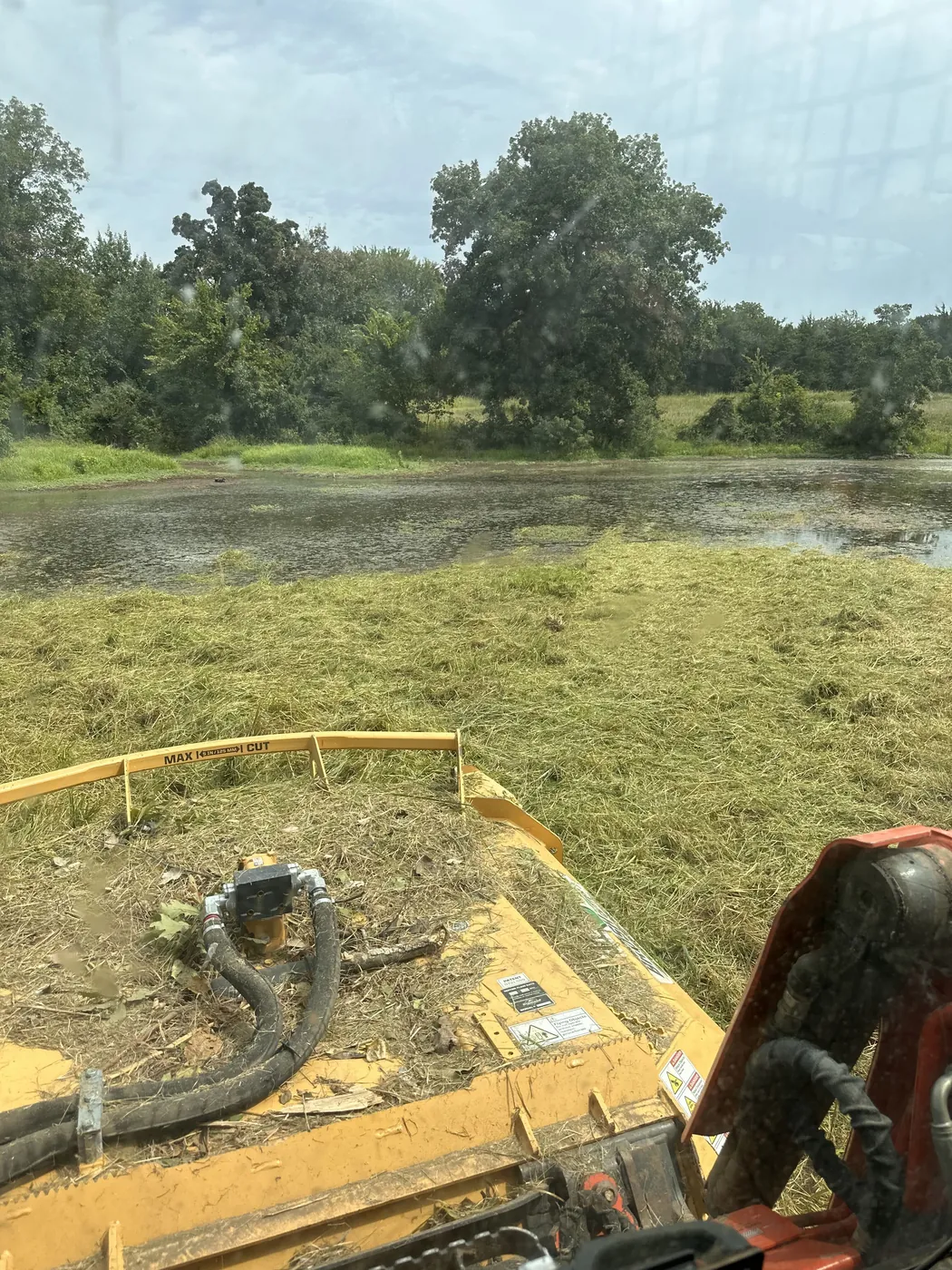
Those are market ranges, not our quote. We are building four ponds right now on one ranch project, and every one priced off the same three questions: how much dirt, is there clay, and what is standing in the way.
What do ponds cost by size?
| Pond size | Published installed range |
|---|---|
| Quarter acre | $1,800 – $8,100 |
| Half acre | $2,400 – $11,600 |
| 1 acre | $3,000 – $15,000 |
| 2 acres | $6,000 – $30,000 |
| 4 acres | $12,000 – $60,000 |
| 10 acres | $15,000 – $70,000 |
Two adders matter more than the base table. Clearing a wooded basin runs $1,200 to $8,000 an acre and can eat half a pond budget; Oklahoma landowners report exactly that on treed sites, and the clearing side is work we price into the same trip. And if the soil will not seal, OSU puts liner membranes near $10,000 per acre, with hauled clay costing similarly. That one line is why the smart money digs test holes first.
Cleanouts of old silted ponds price differently, commonly $25 to $90 per cubic yard commercially, and the biggest swing is whether spoil stays on the property or rides off on trucks.
The Oklahoma rules that shape a good pond
The state’s own agencies publish the recipe, and it is better than most contractors’ folklore.
Depth: the wildlife department says a fishing pond wants at least a quarter of its area 10 feet deep, so it carries through dry years. Keep shallow edges past three and a half feet or the weeds take them.
Watershed: in eastern Oklahoma, plan on about 5 acres of drainage feeding each surface acre of pond. Too little watershed and it never fills; too much and the spillway earns its keep every spring.
Soil: 30 percent clay or better generally seals. OSU’s method is test holes on a 50 to 100 foot grid, a core trench cut along the dam line into tight material, and fill packed back in 6-inch lifts with tracks or a sheepsfoot, never a smooth roller. The best dam dirt is a clay, sand and silt mix, proven with a ribbon test, not pure clay.
Site: the wildlife department’s money sentence is worth quoting straight: pick the spot where a low, short dam backs water over a wide flat area. That single choice moves the dirt bill more than anything a machine does later.
Permits, water rights and free fish
Most ranch ponds need no permit. The Water Resources Board steps in at dams over 25 feet or 50 acre-feet of storage, and an agricultural exemption covers smaller ponds designed with help from a conservation district or federal ag agency. Watering stock at normal grazing capacity counts as domestic use, which requires no water permit. NRCS help with siting and sizing is free, and it is the cheapest engineering a landowner will ever get.
Then the part people miss: the state stocks qualifying ponds free. New or reclaimed ponds of a half acre and up get 100 largemouth bass, 100 channel catfish and 500 bluegill per acre at no charge. You need a current fishing license, the pond cannot charge for fishing, and the application deadline is May 31, which means a pond dug in fall or winter is sitting ready when the fish trucks run.
Is a pond worth the money?
The best data says yes, within reason. An appraiser-led study of rural land sales found pond acreage raised bare land values 6 percent on average, up to 42 percent on smaller tracts, and pond properties sold roughly 20 percent faster. The effect fades as acreage grows and reverses on a neglected, silted-in pond, which is the case for building it right once.
There is also the reason Oklahoma built its first 150,000 ponds: stock water in dry years. A pond with real depth is drought insurance you can see from the porch.
Call (580) 344-7473 and tell us about the draw you have in mind. We will dig the test holes, read the clay, and put a free, real number on it, and if the ground says no, we will tell you that too. The digging itself is the easy part; the siting is where a pond gets won.