
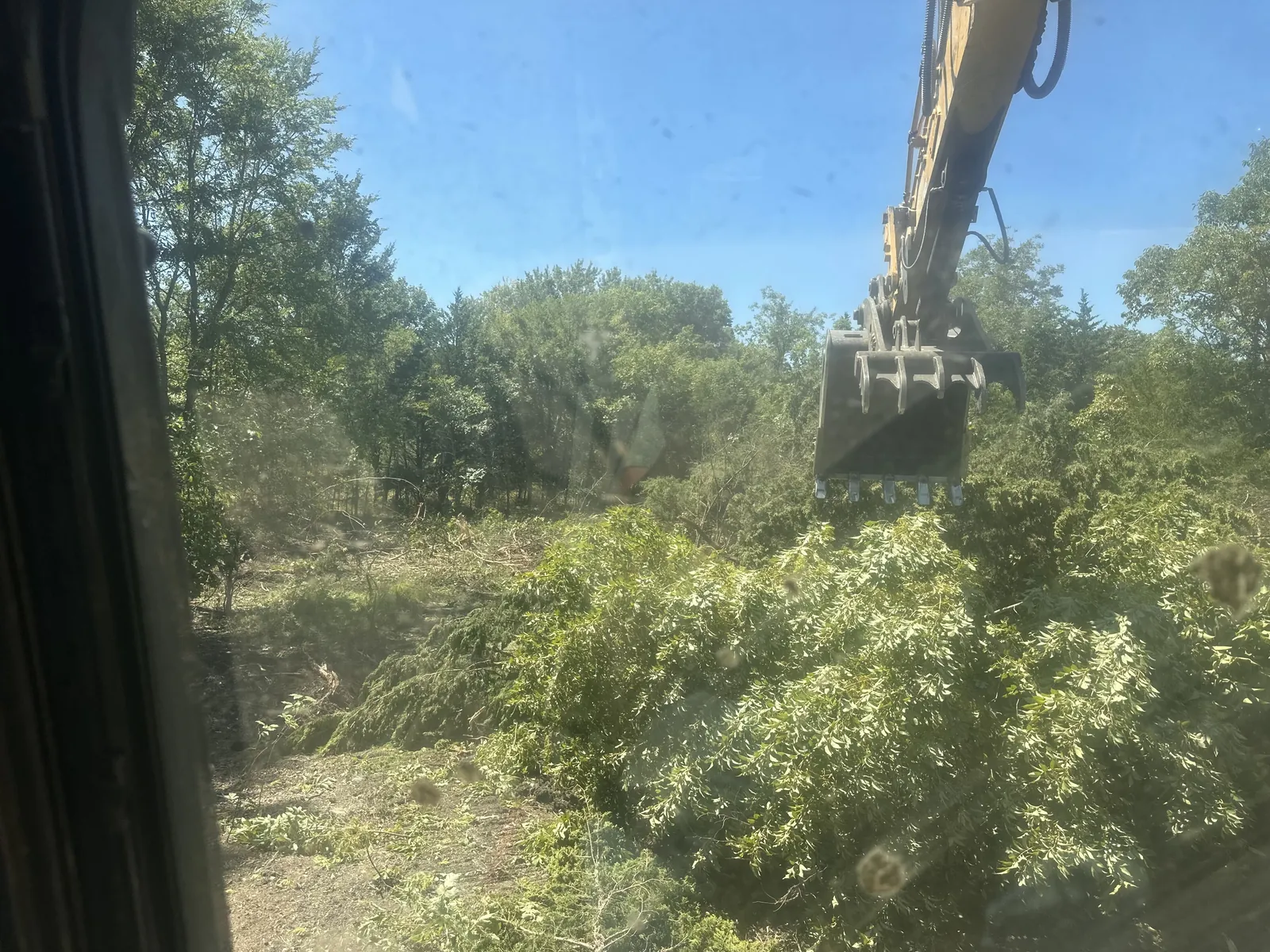
How Much Does Excavation Cost?
Excavation in Oklahoma prices by the hour and by the yard. A machine with an operator runs about $100 to $250 an hour, bulk digging runs $1 to $15 per cubic yard depending on the ground, and typical quoted jobs land between $1,700 and $6,700. Small jobs cost more per unit than the math suggests, because mobilization gets paid before the first bucket.
Those are market figures, national ones at that, and Oklahoma work often prices under them. Our excavation service quotes off a free site look. Here is how the numbers stack for the digs people actually call about.
What do common digs cost?
| Job | Typical market range |
|---|---|
| Trenching, small runs | $11.55 – $27.48 per linear foot |
| Trenching, long simple runs | $5 – $12 per linear foot |
| New foundation excavation | $1,500 – $12,000 |
| Pool dig | $1,100 – $3,000 by size, up to $4,500 |
| Crawl space dig | $3,000 – $10,000 |
| Dirt haul-off | $8 – $25 per cubic yard plus dump fees |
| Delivered fill dirt | $5 – $30 per cubic yard |
Two honest caveats on tables like this. First, per-yard prices collapse as volume grows: a 10-yard job carries the whole mobilization on a few buckets, which is how “$108 to $247 per yard” small-job figures happen. Second, depth prices in steps, not a straight line. A shallow utility trench and an 8-foot cut are different animals per foot.
What moves a dig up the range: rock, which can double or triple the per-yard price; clay-heavy or wet ground, commonly a 25 to 50 percent adder; tight access; and how far spoil travels. On most rural jobs we spread spoil on site with the dozer, which beats trucking it away, and heavier reshaping falls under dirt work.
What does a storm shelter pit involve here?
Oklahoma averages 59 tornadoes a year by the National Weather Service count, and 2024 set the all-time record at 152. Shelter digging is steady work in this state for a reason.
Published Oklahoma installed prices for below-ground concrete shelters run about $4,850 to $5,650 for family-size units, dig and set included. Read the fine print on haul-off: a shelter pit throws off more spoil than people expect, and some installers charge extra to remove it. The dig itself wants a flat, square hole cut to the maker’s spec, backfilled in lifts so the surround does not settle into a dip.
Two Oklahoma programs are worth knowing. The SoonerSafe rebate pays up to $3,000, capped at 75 percent of cost, for new shelters built to FEMA standards, by post-completion reimbursement and partly by drawing. And locally, the City of Ada runs a free storm shelter registry through Emergency Management, so first responders know where to look after a storm. We dig it; register it.
Why the 811 call is built into every schedule
No dig starts without locates. Oklahoma law sets the notice at no less than 48 hours, excluding the day of the call, weekends and holidays, which is two business days in practice. The ticket lives 14 calendar days from the start date. Within 24 inches of a marked line, the rules require hand-dug test holes, and machines stay off marked routes until the line is exposed.
One rural detail people learn the hard way: locate tickets out here want real driving directions, with distances and compass headings, because a county-road address alone does not place a dig. And the marks only cover utility-owned lines. The old water run from the meter to the barn is the owner’s, unmarked, and exactly where careful digging matters.
How a dig gets priced fairly
A useful excavation bid names the depth, the spoil plan, the access and the rock risk. If a price seems low, one of those four is usually missing. Ground in this part of Oklahoma runs from sandy loam that digs clean to shallow rock where the Arbuckle country comes up, and nobody knows which one your site is until the ground gets checked.
That is why the estimate starts with a look. Call (580) 344-7473, tell us what needs digging, whether that is footings, a trench, a shelter pit or a pool hole for the builder, and we will put a real number on it. The pad and site prep can price on the same visit.